Overview
Deployd IQ is an AI-powered platform that changes how software teams understand code changes. By automatically analyzing GitHub repositories and providing rich, interactive visualizations of change impact, the platform bridges the gap between technical complexity and stakeholder comprehension. I led the product design, UX strategy, and AI integration for this platform, creating an experience that serves everyone from developers to product managers.
The Problem
Understanding the impact of code changes across a repository is time-consuming and error-prone. Developers struggle to communicate the full implications of their changes to stakeholders, while reviewers and managers lack tools to quickly assess change impact without deep technical analysis.
I identified three core pain points through user research:
- Communication gaps: Technical teams couldn't effectively convey the scope of changes to non-technical stakeholders
- Manual effort: Existing solutions required extensive manual analysis or provided only superficial insights
- Context blindness: Traditional diff tools show what changed, but not why it matters or what it affects

Discovery & Research
I conducted extensive research with diverse stakeholder groups to understand the full spectrum of needs around code change analysis. The research revealed five distinct user personas, each with unique requirements:
- Software Developers need to understand impacts of their changes and communicate them effectively to reviewers
- Tech Leads require tools to review and validate changes across the codebase without diving into every line
- Product Managers want high-level understanding of technical changes without getting lost in code details
- QA Engineers need to understand which areas require focused testing based on change scope
- DevOps Engineers must assess deployment risks and understand dependency chains
Key insights from user interviews:
- 70% of code review time was spent understanding context, not evaluating the actual change
- Cross-team communication about technical changes often led to misunderstandings
- Risk assessment was largely intuitive rather than data-driven
Design Strategy
User Dashboard & Navigation
I designed a centralized dashboard that provides immediate value upon login. The interface includes workspace selection, recent analyses, repository health metrics, and quick action shortcuts. The goal was to reduce time-to-insight by surfacing the most relevant information immediately.
Interactive Visualization Canvas
The core innovation is an infinite canvas that visualizes code changes as an interactive graph. I designed this canvas to support multiple levels of detail:
- File level: See which files are affected at a glance
- Class level: Understand structural changes within files
- Method level: Dive into specific function-level impacts
- Line level: Examine granular changes when needed
The canvas supports intuitive navigation with zoom, pan, and keyboard shortcuts. Nodes are color-coded by impact level and can be expanded or collapsed to manage complexity.
Workspace Management
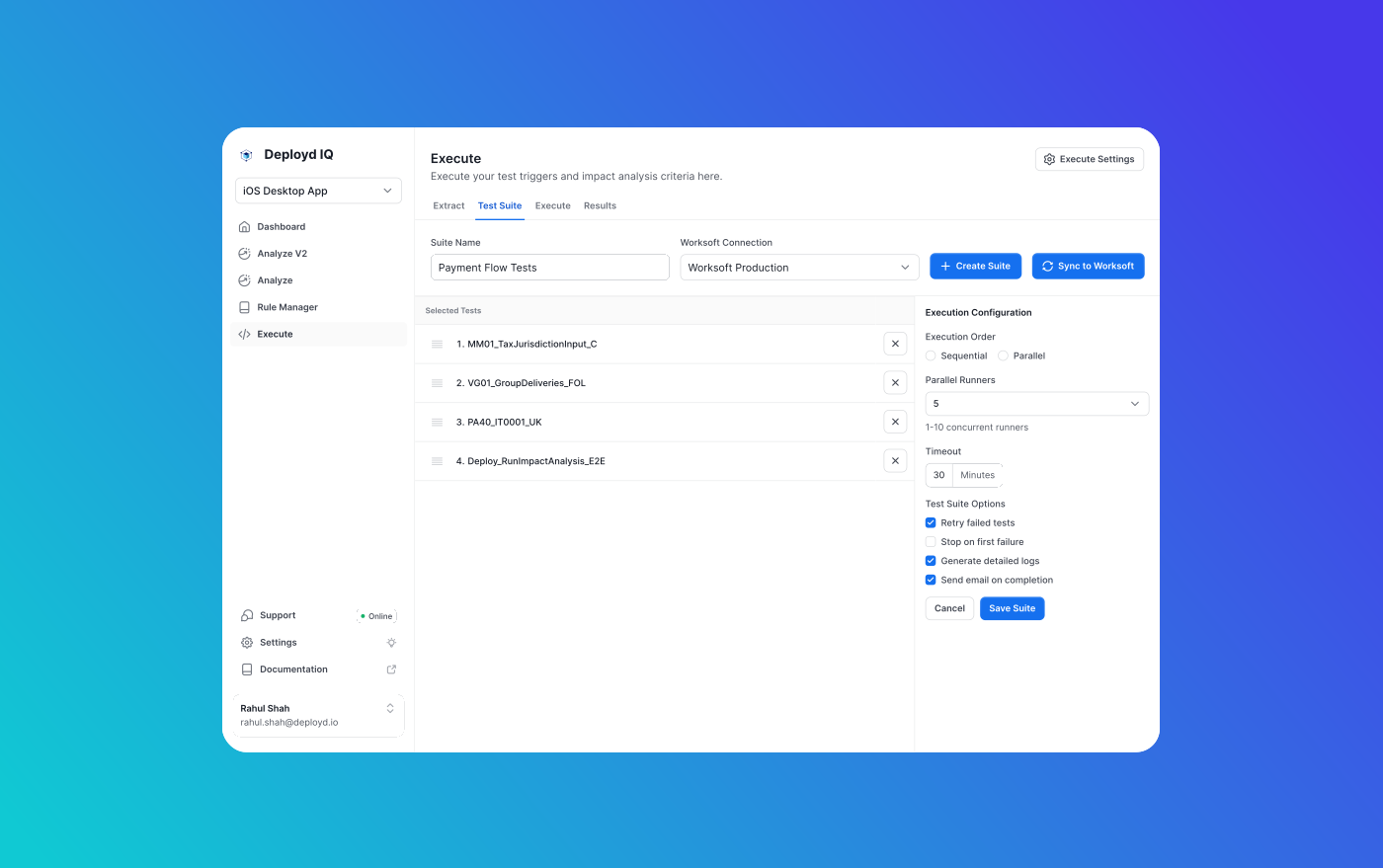
I created a flexible workspace system that allows teams to organize analyses by project, product, or team. Each workspace can connect multiple repositories and maintain custom configurations. This structure supports both small teams with a single project and enterprises managing dozens of repositories.
Repository Analysis
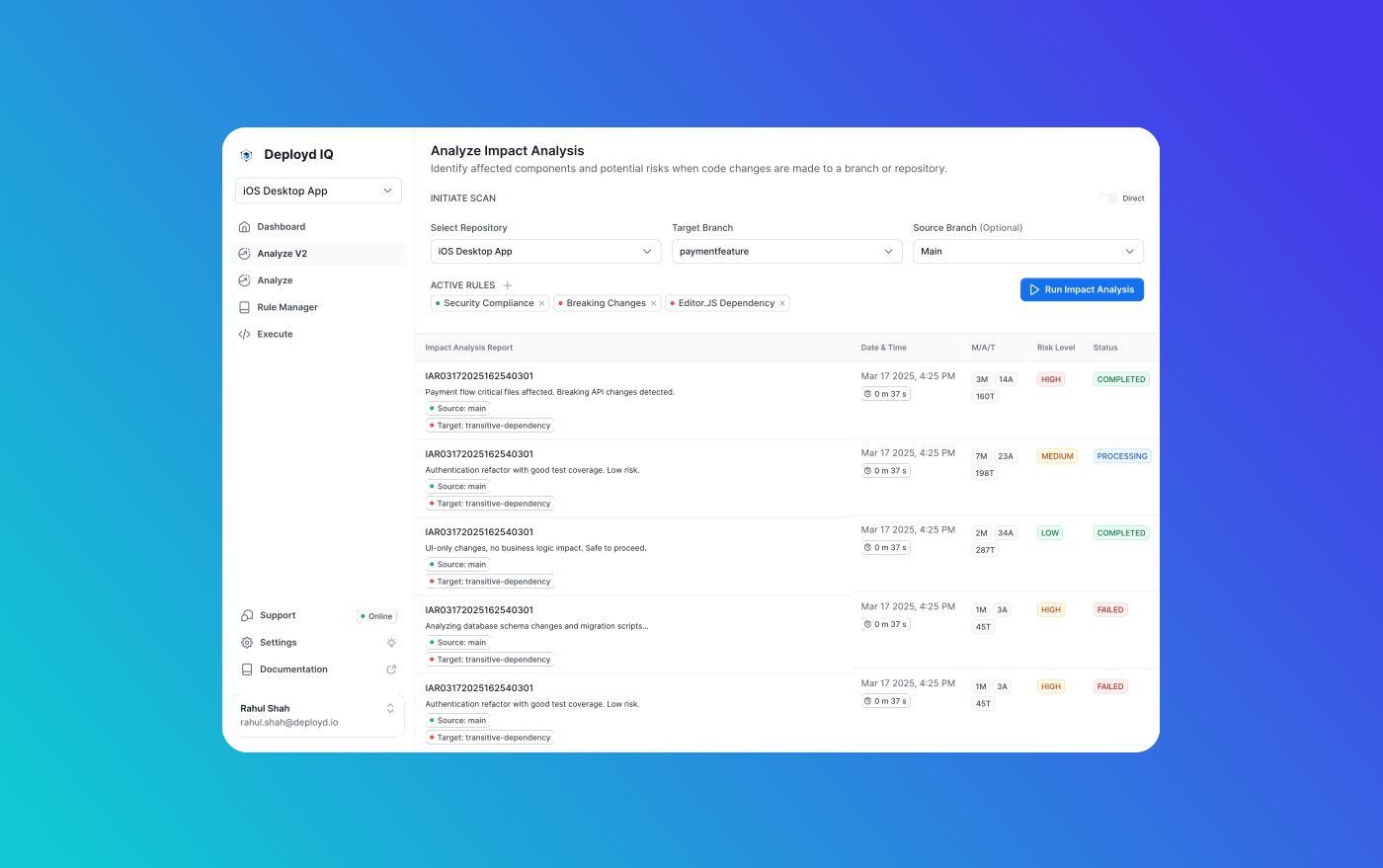
The analysis flow integrates directly with GitHub, allowing users to compare any two branches with a few clicks. I designed the interface to guide users through branch selection, analysis depth configuration, and result interpretation. Real-time progress indicators keep users informed during analysis.
AI Integration
I led the AI strategy for Deployd IQ, designing how LLM capabilities would enhance every aspect of the platform:
Intelligent Change Descriptions
The platform uses advanced LLMs to analyze code differences and generate natural language descriptions of each change. Instead of reading raw diffs, users see human-readable summaries explaining what changed and why it matters.
Impact Assessment
I designed a four-tier impact classification system:
- Critical (Red): Changes that could cause system failures or breaking changes
- High (Orange): Significant changes affecting core functionality
- Medium (Yellow): Notable changes with moderate scope
- Low (Blue): Minor changes with limited impact
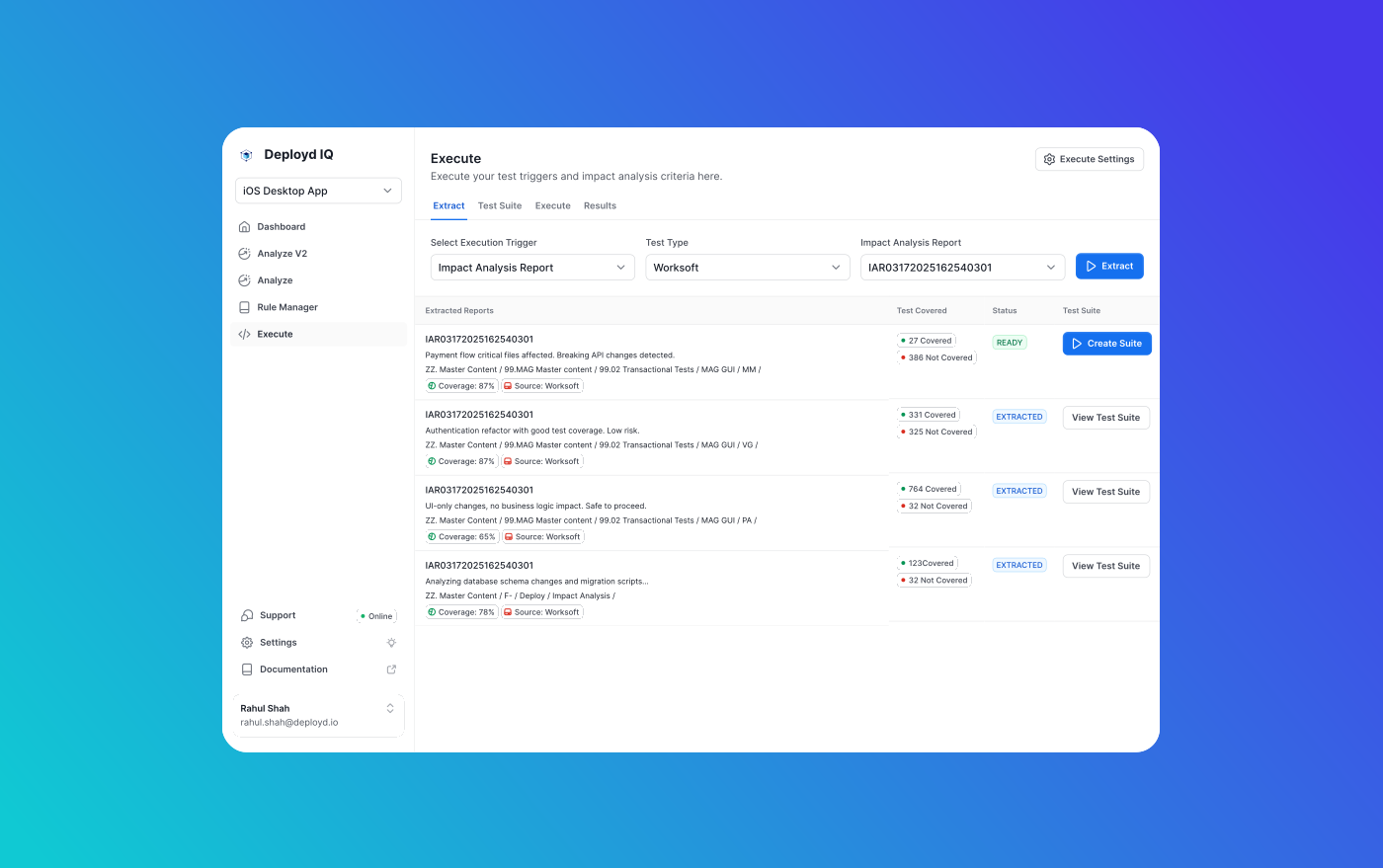
Each assessment includes confidence scoring and reasoning, making the AI's decisions transparent and auditable.
Dependency Mapping
The AI automatically identifies and visualizes dependencies between modified components. Direct dependencies appear as solid lines, indirect dependencies as dashed lines, and bidirectional dependencies as double-headed arrows. This mapping helps teams understand the ripple effects of their changes.
Risk Assessment
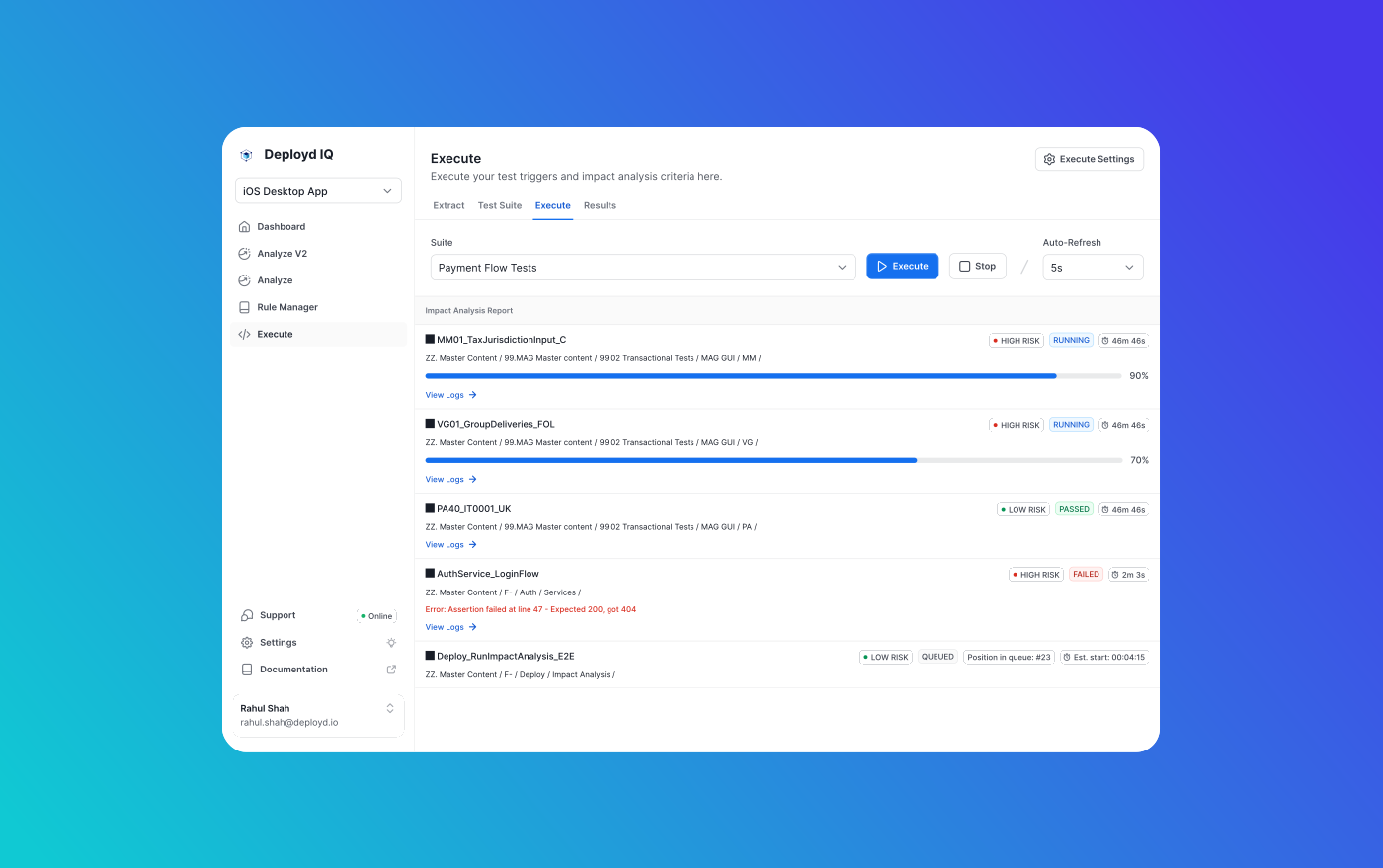
For each change, the platform provides:
- Breaking change probability
- Test coverage recommendations
- Security risk indicators
- Performance impact estimates
- Documentation gap identification
Visual Design System
I created a comprehensive design system that unifies the experience across all platform components:
Node Styling
- Files: Folder icons with language-specific indicators
- Classes: Rectangular nodes with class names
- Methods: Oval nodes with method signatures
- Added code: Green outline
- Modified code: Yellow outline
- Deleted code: Red outline
Information Hierarchy
The right sidebar reveals detailed information when nodes are selected, including code diffs with syntax highlighting, markdown-formatted descriptions, and action buttons for sharing and exporting. The design prioritizes scanability while providing depth on demand.
Outcome & Impact
The platform is designed to achieve significant improvements in development workflow efficiency:
Target Metrics
- 70% reduction in time spent on change impact analysis
- Improved accuracy of impact assessments through context-aware AI
- Enhanced communication between technical and non-technical stakeholders
- Reduced deployment risks through better dependency understanding
Results
- Unified visualization experience for all stakeholder types
- AI-powered insights integrated throughout the analysis workflow
- Flexible design system supporting repositories of any size
- Shareable canvas states for asynchronous collaboration
Key Highlights
Target Users
- Software Developers
- Tech Leads and Engineering Managers
- Product Managers
- QA Engineers
- DevOps Engineers
Key Features Designed
- Interactive infinite canvas with hierarchical visualization
- AI-powered change descriptions and impact assessment
- GitHub integration for branch comparison
- Four-tier impact classification system
- Dependency mapping with visual connections
- Workspace management for multi-repository support
- Export and sharing capabilities
Tools Used
- Figma (design system, prototypes)
- User research and stakeholder interviews
- AI/LLM integration design
- React Flow exploration for canvas implementation
- Design system documentation
Reflection
Designing Deployd IQ challenged me to bridge the gap between complex technical information and intuitive user experiences. The most rewarding aspect was creating a visualization system that serves both developers who need granular detail and product managers who need high-level understanding.
Working on the AI integration taught me valuable lessons about designing with LLMs. The key insight was that AI should augment human judgment, not replace it. By making the AI's reasoning transparent through confidence scores and explanations, we built trust with users who initially skeptical of automated analysis.
The infinite canvas presented unique UX challenges around navigation and information density. I learned that progressive disclosure is essential when dealing with complex data structures. Users need to control their depth of exploration, and the interface must support both quick scanning and deep investigation.