Overview
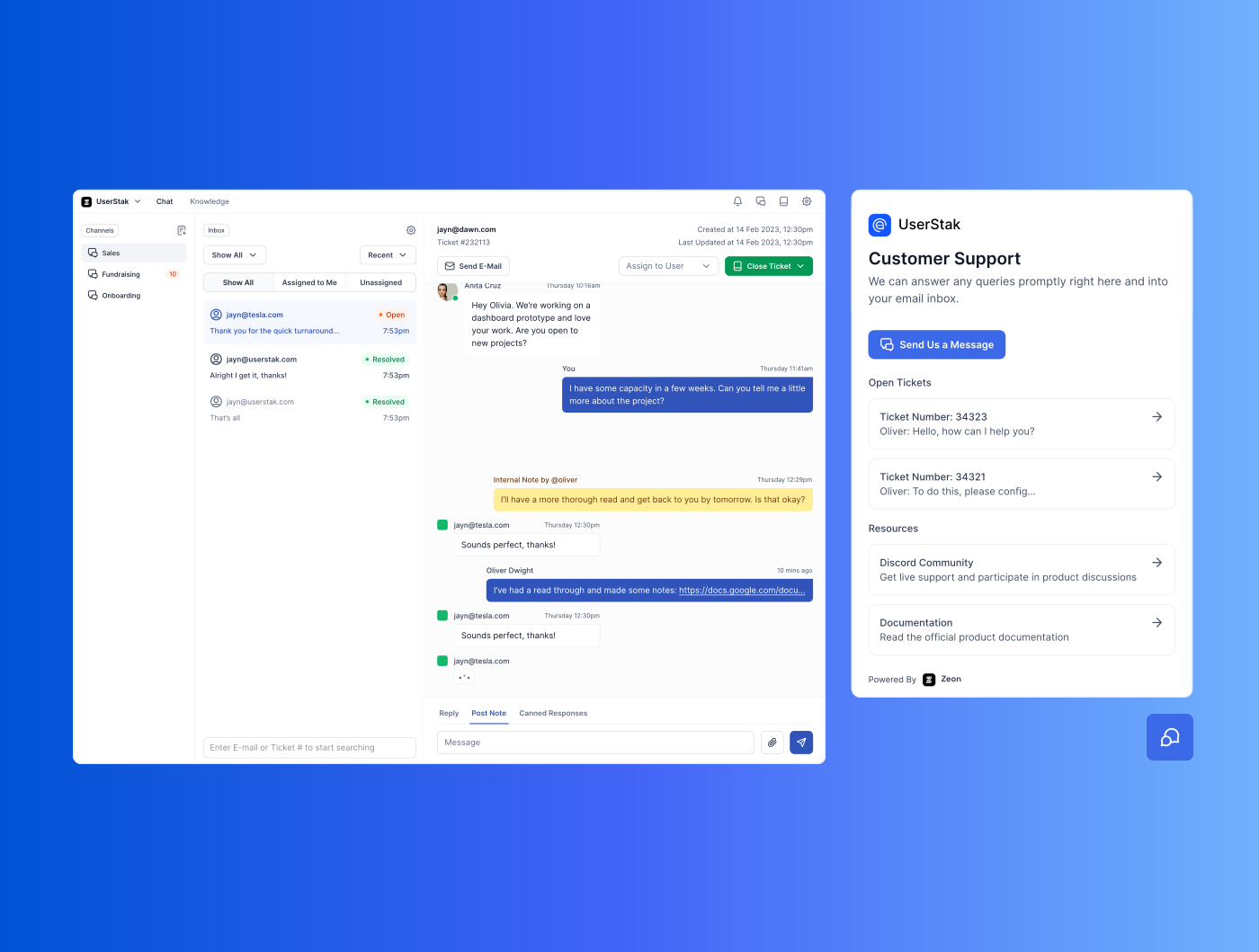
Zeon was an open-source initiative I founded to explore how AI could transform customer support. I led this project from concept to production over about two years, designing a platform that enabled companies to deploy intelligent AI agents for customer interactions. The project was wound down in late 2024 as more mature solutions emerged in the AI customer support space.
The Challenge
Customer support has traditionally been a pain point for businesses of all sizes. Small teams struggle to provide 24/7 coverage, while larger organizations face challenges in maintaining consistency and quality across high volumes of interactions. I saw an opportunity to use emerging AI capabilities to create a solution that would be accessible to everyone. That's why I decided to make Zeon open-source.
Discovery & Research
Before diving into design, I conducted extensive research to understand:
- Pain points in existing customer support workflows
- AI capabilities and their practical applications in support contexts
- Open-source community expectations for contribution and customization
- Technical constraints that would affect the user experience
This research revealed that while AI could handle many routine inquiries, the real value lay in smooth handoffs between AI and human agents, and in providing businesses with insights from their customer interactions.
Design Process
UX Strategy for Three User Groups
I developed a comprehensive UX strategy addressing three distinct user groups:
- Business administrators who configure and deploy AI agents
- Support teams who work alongside AI and handle escalations
- End customers who interact with the AI-powered support
Key Design Decisions
Intuitive Configuration: The platform needed to be accessible to non-technical users while offering power users the flexibility they needed. I designed a visual configuration system that made complex AI behaviors understandable and editable.
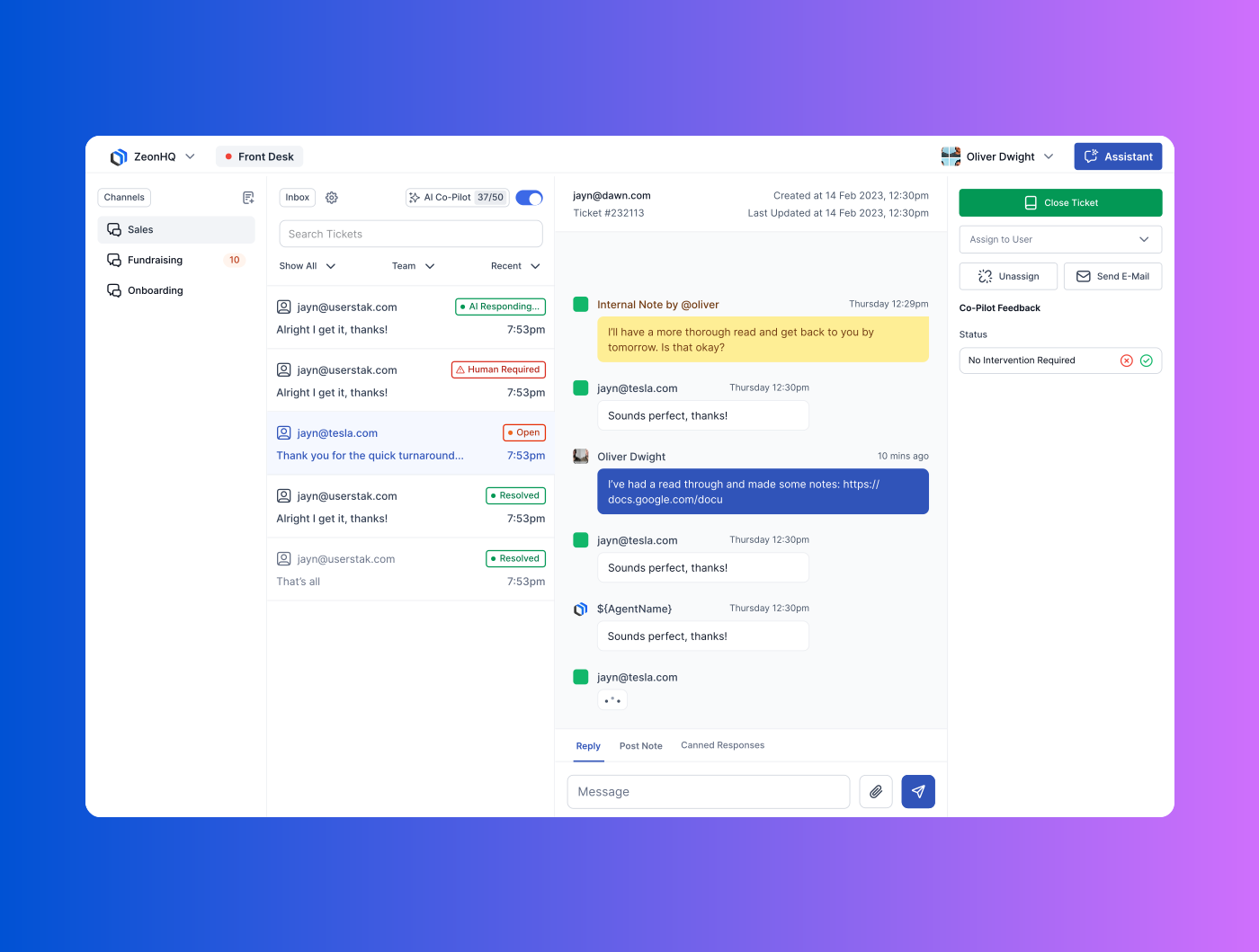
Transparency in AI Actions: Users needed to understand what the AI was doing and why. I implemented clear feedback mechanisms and conversation logs that built trust in the system.
Community-First Approach: As an open-source project, the design needed to consider contributors. I created comprehensive design documentation and component libraries to enable consistent community contributions.
Landing Page & Growth
Beyond the product itself, I designed and developed the Zeon landing pages, focusing on:
- Clear value proposition communication
- Developer-friendly documentation layout
- Community contribution pathways
- Open-source credibility signals
Technical Collaboration
Working closely with a cross-functional team, I ensured that design decisions were technically feasible while pushing for the best possible user experience. This included:
- Regular design-development syncs
- Prototype testing with real AI integrations
- Performance considerations in interface design
- Accessibility across all interaction patterns
Outcome & Impact
During its two-year run, Zeon achieved:
- Active community of contributors who improved the platform
- Business adoption by companies seeking AI-powered support solutions
- Positive feedback on the intuitive design approach
- Valuable lessons in open-source design, AI UX, and community building
The project was ultimately wound down as the AI customer support space matured rapidly, with well-funded competitors offering more comprehensive solutions.
Key Highlights
Target Users
- Business administrators
- Customer support teams
- Developers and contributors
- End customers (indirect)
Key Features Designed
- Visual AI agent configuration
- Real-time conversation monitoring
- AI-human handoff workflows
- Analytics and insights dashboard
- Community contribution guidelines
Tools Used
- Figma (UI design, prototyping)
- User interviews and testing
- Webflow (landing pages)
- Design system documentation
Reflections
Founding and designing Zeon taught me valuable lessons about:
- Open-source design: Creating systems that enable contribution while maintaining quality
- AI UX: Making AI capabilities understandable and trustworthy to users
- Community building: Designing not just for users, but for contributors
- Knowing when to stop: Recognizing when market conditions have shifted and pivoting accordingly
Even though Zeon is no longer active, the experience shaped how I approach AI product design today. The lessons about transparency, user trust, and community-first thinking continue to inform my work.